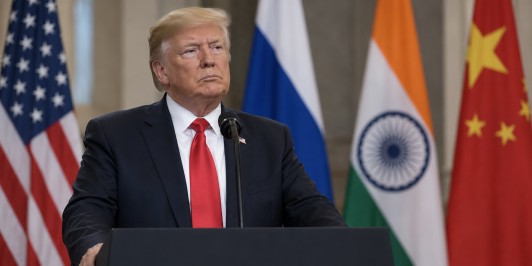
President Donald Trump has signaled a potential escalation in the economic pressure on Russia, leveraging new tariff authorities granted by the Lindsey O. Graham Sanctioning Russia and Iran Act of 2026. Speaking at the United Nations General Assembly, Trump suggested that he could impose tariffs as high as 100% on countries purchasing Russian oil and gas, a move primarily targeting major buyers such as China and India, to push Moscow towards ending the war in Ukraine.
The legislation, signed into law last week, enhances the U.S. president’s ability to influence global energy trade by allowing significant tariffs on nations engaging with Russia’s energy sector. This approach forms part of a broader strategy to compel Russia to negotiate a resolution to the ongoing conflict in Ukraine. Trump emphasized the necessity of these powers to facilitate an end to the hostilities, underscoring his administration’s commitment to addressing the crisis.
In addition to tariff measures, the law introduces a suite of sanctions aimed at Russian officials, financial entities, and energy networks, particularly those implicated in bypassing previous sanctions. This multifaceted strategy is designed to intensify economic pressures on Russia while also offering a degree of flexibility in its application.
The potential impact on India and China, both significant consumers of Russian energy, remains contingent on Trump’s future decisions regarding tariff implementation. While the law grants the authority, it does not automatically impose tariffs, leaving room for diplomatic maneuvering and negotiation.
Ukrainian President Volodymyr Zelenskyy has backed the new sanctions law, signaling his readiness to engage in further diplomatic efforts to halt the war. As the international community observes these developments, the effectiveness of increased sanctions and tariffs in altering Russia’s course remains to be seen.