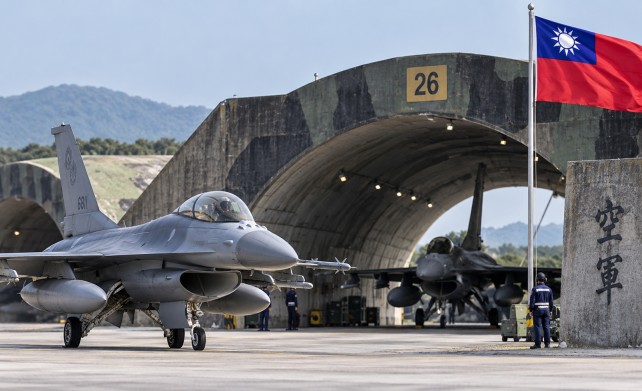
Taiwan’s air force is gearing up to construct 26 additional reinforced aircraft shelters in anticipation of receiving 66 new F-16V Block 70 fighter jets from the United States. With these new arrivals, the fleet of F-16Vs stationed on Taiwan’s east coast is expected to expand to about 110 to 120 aircraft. The new fighter jets will be stationed at Chihhang Air Base in Taitung County, complementing the existing F-16V Block 20s already operating out of Hualien County.
To safeguard this growing fleet, Taiwan’s air force has allocated more than NT$6.88 billion for constructing new shelters between 2027 and 2031. This initiative will see 22 shelters built in Hualien and four in Taitung, aiming to implement a “one aircraft, one shelter” strategy. Additionally, five general aircraft hangars and supporting facilities will be erected in Hualien to accommodate transport aircraft.
The project timeline includes initial management, surveying, and design work set to commence in 2027, with detailed design and contracting phases planned for 2028 and 2029. Construction is expected to start in 2030 and conclude by 2031. These shelters are designed to enhance the survivability of Taiwan’s fighter fleet during a military crisis, allowing aircraft to disperse to protected locations in Hualien and Taitung. This strategy is intended to preserve combat capabilities and ensure the continuation of interception, suppression, and homeland defense missions.
The newly constructed shelters will offer improved protection against explosive attacks, ensuring that more fighter jets can remain operational during sudden assaults. In parallel, President William Lai has called on military officers to stay abreast of rapid technological advancements and shifts in the global security landscape. He emphasized the need for strengthening joint operations, enhancing asymmetric capabilities, and future-proofing defense strategies by incorporating artificial intelligence as a supporting tool.
President Lai also highlighted the critical importance of maintaining military readiness and continuing investments in national defense. He asserted that bolstering Taiwan’s defense capabilities is crucial for preserving peace and safeguarding the island’s sovereignty.