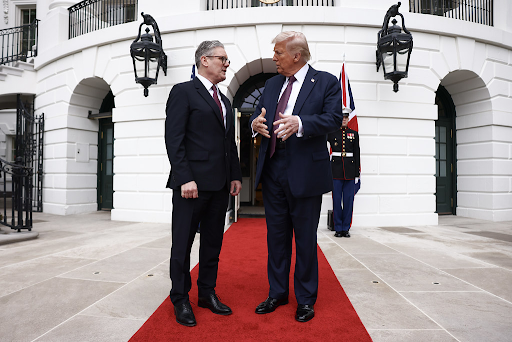
The Western alliance on Middle East policy showed deep fissures on Thursday, as President Donald Trump and Prime Minister Keir Starmer revealed their divided house on the issue of Palestinian recognition. Trump’s public rejection of the UK’s plan in London has exposed a fundamental disagreement at the heart of the “special relationship.”
President Trump stood as a pillar of the traditional U.S. stance, arguing that Palestinian statehood is a final status issue to be determined by the parties in the conflict, not by external actors. The recent U.S. vote against a UN two-state solution resolution was a clear demonstration of this commitment to a process-driven approach, even in the face of global opposition.
Prime Minister Starmer, on the other hand, positioned himself as a reformer, advocating for a new approach. He defended the UK’s plan for recognition as a “necessary catalyst” to break the long-standing deadlock. He argued that this move is designed to empower, not replace, a negotiated settlement.
This public debate highlights a schism between a passive and an active approach to diplomacy. The U.S. advocates for a more passive role for the international community, acting as a facilitator but not an instigator. The UK is now moving towards a more active role, willing to take a significant step to try and change the diplomatic calculus.
The state visit, which should have been a symbol of unity, has instead become a symbol of this division. Starmer’s government has delayed the recognition to keep the peace during Trump’s visit, but the UK’s intent to pursue an independent—and contradictory—policy is now a matter of public record, posing new challenges for Western unity.