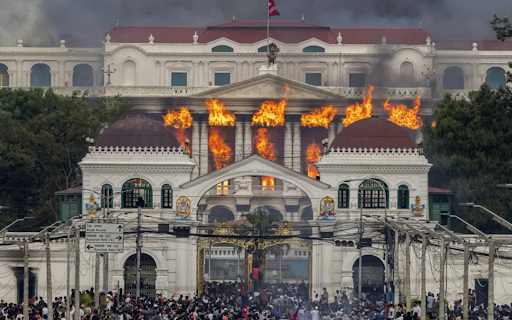
Every volatile political situation has a tipping point, a moment where simmering tensions boil over into open conflict. In Nepal, that tipping point was the government’s decision to ban social media. This single act pushed a nation already trembling on the edge of chaos into a full-blown crisis of violence and instability.
The nation had been inching towards this edge for years, driven by powerful undercurrents of social and economic unrest. The primary force was the immense frustration of the youth, who faced a 20% unemployment rate and saw little hope for a prosperous future. Their despair created a highly volatile social environment.
This volatility was amplified by a complete lack of faith in the ruling establishment. The government was widely seen as corrupt, nepotistic, and indifferent to the struggles of its people. The visible inequality between the lives of politicians and ordinary citizens added a sharp, personal edge to the public’s anger, bringing the nation closer to its breaking point.
The social media ban was the final push. It was a uniquely provocative act that combined authoritarianism with a direct attack on the youth’s primary mode of expression. It crystallized all the free-floating anger and dissatisfaction into a single, focused point of resistance. In that moment, the potential for unrest became a reality, and Nepal tipped over the edge into chaos.