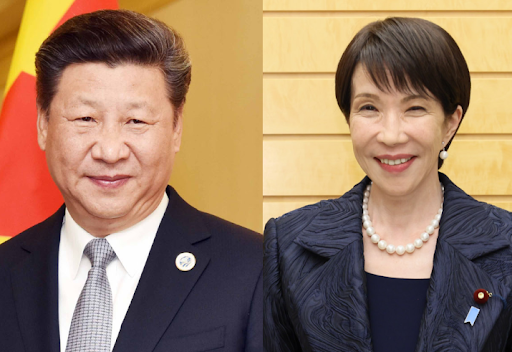
The timing of the current Japan-China crisis compounds economic uncertainties as it coincides with various other challenges including global economic volatility, technological disruptions, and regional security tensions, creating multiplicative effects where businesses and investors face multiple simultaneous uncertainties that are difficult to disentangle and assess comprehensively. Prime Minister Sanae Takaichi’s Taiwan statements triggered bilateral tensions during a period when economic actors already faced substantial other uncertainties, making risk assessment and strategic planning particularly challenging.
The compounding uncertainties create challenges for economic modeling and projection. Economist Takahide Kiuchi’s estimates of $11.5 billion in tourism losses from over 8 million Chinese visitors representing 23% of all arrivals are based on bilateral crisis impacts, but actual economic outcomes depend also on global economic conditions, exchange rates, domestic economic performance, and numerous other variables that interact with bilateral tensions in complex ways difficult to model precisely.
For businesses like Rie Takeda’s tearoom experiencing mass cancellations, the compounding uncertainties create challenges in determining appropriate responses. Should they restructure operations based on assumptions of prolonged bilateral tensions, or maintain capacity hoping for diplomatic resolution? The decision depends not just on bilateral trajectory but also on broader economic conditions, alternative tourist source markets, and domestic economic strength affecting local consumption—multiple uncertainties that must somehow be combined into actionable business strategies.
The timing dimension also affects crisis resolution prospects. When bilateral crisis occurs during periods of relative global economic stability and growth, the economic costs of confrontation may appear more manageable and political leaders may have greater flexibility to prioritize security or political considerations over economic concerns. However, if bilateral crisis contributes to broader economic difficulties through confidence effects and reduced trade and investment, the costs may become unsustainable and create stronger pressures for diplomatic resolution.
The compounding uncertainties may also affect how international investors and businesses assess East Asian economic prospects more broadly. If bilateral crisis between the region’s two largest economies coincides with and potentially contributes to broader regional economic challenges, the perception of East Asia as attractive destination for investment and business operations may suffer, with implications extending beyond the immediate bilateral relationship to affect regional economic competitiveness globally.
Professor Liu Jiangyong indicates countermeasures will be rolled out gradually while Sheila A. Smith notes domestic political constraints make compromise difficult, but both the graduated escalation and difficulty of compromise occur within context of broader economic uncertainties that compound bilateral tensions’ impacts. The multiplicative effects of simultaneous uncertainties may prove larger than simple summation of individual challenges would suggest, as each uncertainty amplifies effects of others and reduces capacity to manage or respond effectively to any single challenge. Small businesses facing bilateral crisis disruptions may find their normal risk management and adaptation capabilities overwhelmed when bilateral tensions compound with exchange rate volatility, global economic uncertainty, technological disruptions, and various other challenges simultaneously, creating crisis management requirements exceeding available resources or capabilities.