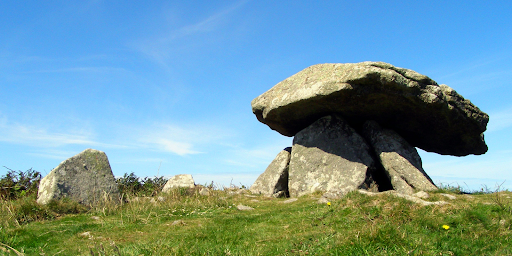
Cornwall’s winter solstice heritage exists at the intersection of rigorous archaeological research and vibrant living tradition. This convergence creates uniquely rich contexts where scholarly understanding enhances community celebrations while traditional practices provide experiential dimensions that complement academic knowledge. The dialogue between research and tradition strengthens both, creating holistic engagement with prehistoric heritage.
Academic research by archaeologists like Carolyn Kennett provides intellectual frameworks for understanding monuments. Detailed surveys reveal precise alignments with astronomical events. Analysis of construction techniques illuminates engineering capabilities. Comparative studies position Cornwall’s monuments within broader prehistoric contexts. This scholarship transforms monuments from mysterious curiosities into understood achievements of prehistoric science and culture.
Living traditions maintained through celebrations like the Montol festival provide experiential knowledge that academic research alone cannot capture. Participating in torch-lit processions, witnessing ritual sun burning, gathering in community at winter solstice—these experiences convey embodied understanding of how seasonal observances function socially and psychologically. This experiential knowledge complements intellectual understanding.
The convergence benefits research by grounding abstract scholarship in lived experience. Archaeologists participating in contemporary celebrations gain insights into how rituals create meaning and facilitate community bonding. These insights potentially illuminate how prehistoric ceremonies might have functioned, providing hypotheses that inform interpretation of archaeological evidence.
Traditional practices benefit from research through enhanced understanding of prehistoric foundations. Learning about astronomical alignments and Neolithic cosmological beliefs adds depth to contemporary celebrations. Participants appreciate that their traditions maintain continuity with sophisticated prehistoric achievements, creating pride in cultural heritage and motivating continued preservation of traditional practices.
Guided walks led by researchers combine academic and experiential approaches. Carolyn Kennett’s winter solstice walks provide scholarly explanations of monument functions while facilitating direct observation of astronomical alignments. Participants gain both intellectual understanding and embodied experience, creating comprehensive engagement that honors multiple ways of knowing.
Tensions occasionally arise at this convergence. Academic rigor sometimes qualifies or contradicts popular beliefs about monuments. Traditional practices may persist despite scholarly evidence suggesting different original functions. Navigating these tensions requires mutual respect between researchers and tradition-bearers, recognizing that different types of knowledge contribute valuable perspectives.
The Montol festival exemplifies successful convergence where research informs celebration without restricting it. Organizers incorporate scholarly understanding of prehistoric practices while adapting traditions to contemporary contexts. Participants appreciate historical connections while creating new meanings relevant to modern life. This balance maintains cultural continuity while allowing evolution.
Contemporary Cornwall demonstrates how convergence between academic research and living tradition creates richer heritage experiences than either approach alone provides. Monuments function simultaneously as subjects of scholarly investigation and focal points for community celebration. This multiplicity of engagement ensures prehistoric achievements remain relevant and meaningful, honored through both rigorous understanding and vibrant practice that maintains connections across four thousand years of human engagement with Cornwall’s remarkable winter solstice landscape.